


Stated at the Book Launch and Review Session for Another Politics: Creating the Iranian Shared World
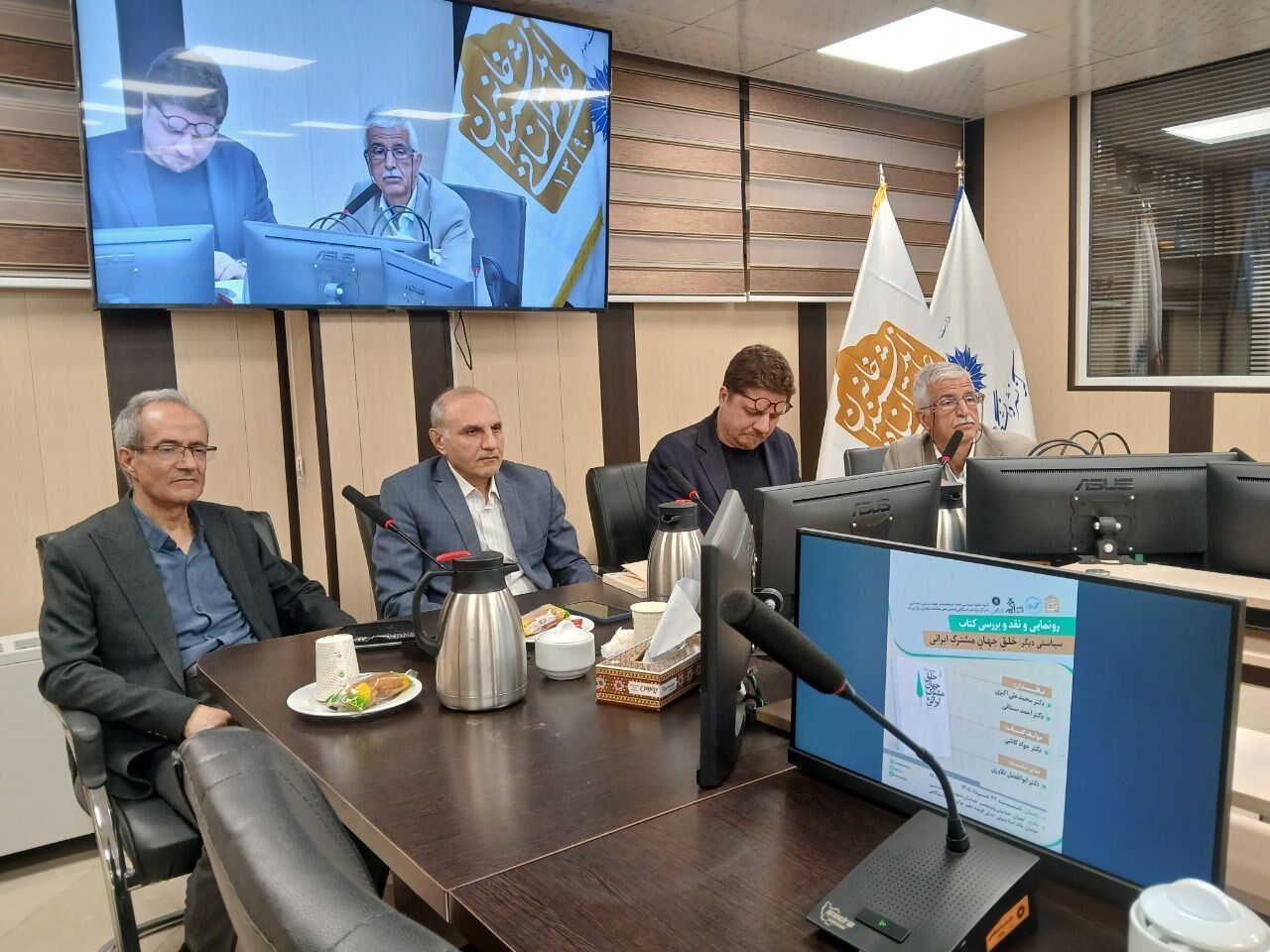
The launch and review session for the book Another Politics: Creating the Iranian Shared World was held on Saturday, June 13, at the Center for Academic Publishing, with the participation of the author and a number of scholars in philosophy and political science. During the event, various dimensions of the book and its place within contemporary Iranian thought were examined and discussed.
Javad Tabatabaei, the author of the book, opened the session by outlining the work’s central idea. He explained that the book is grounded in a formalist approach. According to him, human beings live within a kind of fundamental fantasy of which they are often unaware. From this perspective, what organizes collective life depends less on substantive content than on the hidden forms and structures through which social perception and lived experience are constituted.
Ahmad Bostani, a scholar of philosophy and political science, described the book as a coherent and accessible text rooted in the lived experience of the Iranian people. Referring to the potential of political phenomenology for understanding the political realm, he emphasized that the book can serve as a valuable introduction to this approach within Persian-language scholarship and intellectual discourse. In his view, the very articulation of such themes by an Iranian thinker represents an important step toward expanding the horizons of political thought in Iran.
Mohammad Ali Akbari, another speaker at the session, stressed that the book begins not with the everyday concerns of politics but with the “Iranian Question.” He argued that the author seeks to examine the political dimensions of the problems of the modern world from a different perspective. He added that Iranian society, over the past two centuries, has lost many of its historical foundations and elements of its traditional lifeworld, and therefore requires new horizons through which to understand its present condition.
Akbari further noted that the book should be seen less as a conventional academic study and more as a collection of creative and reflective meditations. It is, he suggested, an attempt to understand who we are today and to open new possibilities for thinking about the Iranian Question and its future prospects.