

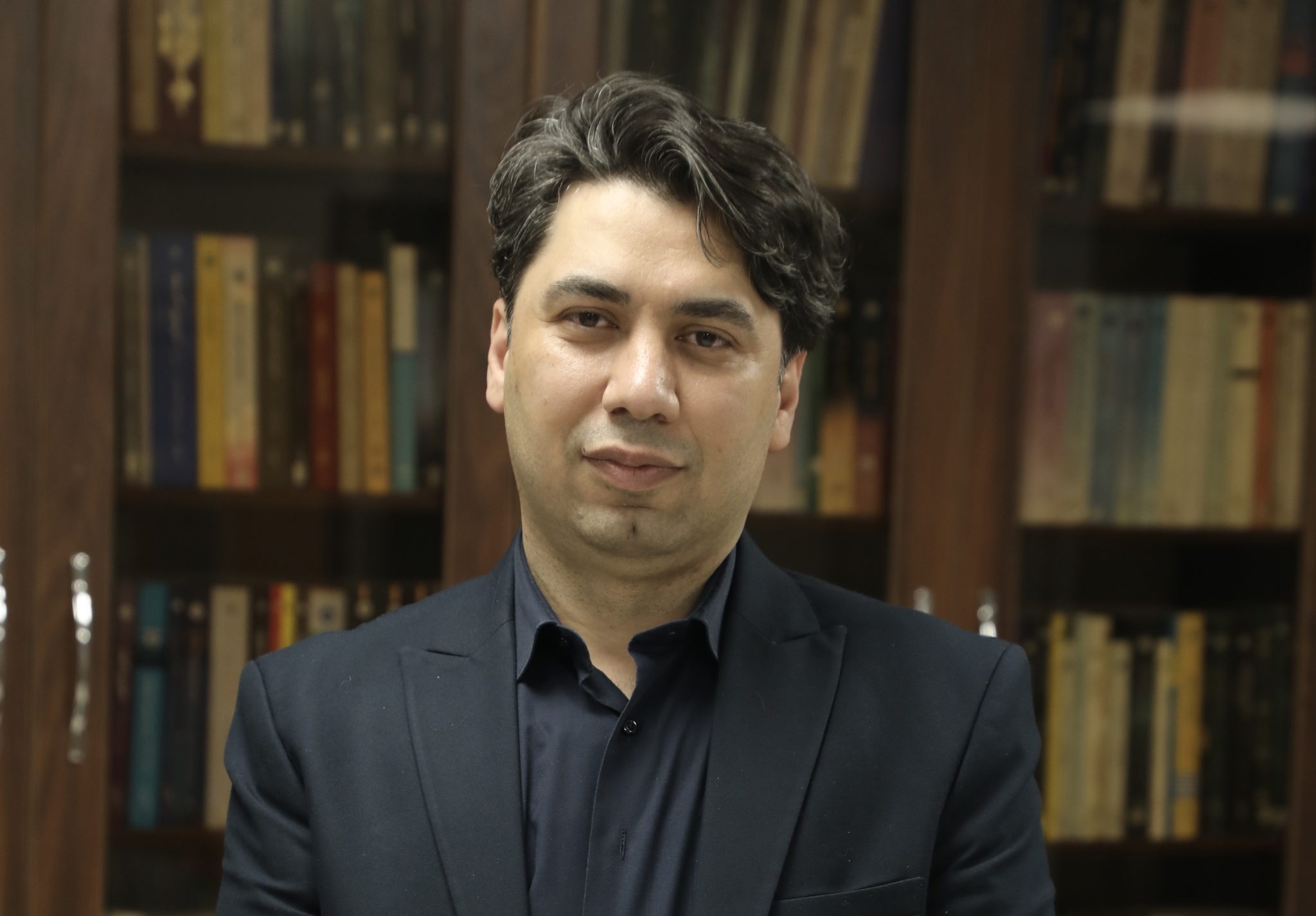


Ahmad Shakeri, referring to the role of the Tehran Virtual Book Fair under difficult conditions for the publishing industry, emphasized that the book fair is one link in the publishing cycle and that the importance of this event lies in its combination of an exhibition and a bookstore.
In an interview with the news headquarters of the 7th Tehran Virtual Book Fair, Ahmad Shakeri — faculty member of the Research Institute for Humanities and Cultural Studies — noted that the idea of holding such an event dates back to the years of the COVID-19 pandemic, when physical book fairs in most countries around the world were canceled.
He said that in Iran as well, in line with international publishing trends and in order to prevent the damage caused by halting professional and cultural activities in the field of books, it was decided that the first virtual book fair would be held in 2020. According to him, revisiting the experience of the first edition offers many interesting points from the perspective of both organizers and audiences.
Referring to the role of the virtual version of the fair in the publishing economy, he added that the international virtual fair model managed, to some extent, to meet the expectations of people involved in the publishing economy, from book production to distribution. However, he stressed that the use of emerging technologies and the ability to adapt to global developments remain essential. He also noted that today’s social conditions in Iran share some similarities with the circumstances during the first edition of the fair. Natural crises such as pandemics, wars, or earthquakes alter part of the collective memory of citizens and disrupt social order and the rhythm of everyday life.
Shakeri described culture and art as among the most important ways for society to adapt to such conditions. He stated that culture and art are among the best tools for helping citizens increase their ability to adapt to rapid changes around them. Within culture, turning toward books and creating affordable and accessible spaces for readers represents a continuation of a collective effort aimed at strengthening social resilience.
Discussing the significance of holding a book fair under current social conditions, this cultural researcher explained that the book fair forms one chain within the broader publishing cycle and that its importance lies in combining the functions of both an exhibition and a marketplace. Despite the difficult conditions involved in publishing books, the publishing community also needs breathing space, and if the exhibition can successfully provide such an environment, it will have achieved one of its core goals: helping sustain the life of the publishing sector.
Shakeri also emphasized the need for targeted support for the various components of the publishing chain. He stated that the key issue under current conditions is providing focused support for different parts of the publishing ecosystem in a way that not only fulfills policy objectives but also simultaneously protects everyone’s interests.
He further suggested that alongside the virtual fair, writers, translators, and experts in the field—regardless of unstable conventional classifications—should be invited to discuss the reasons behind their enthusiasm or lack of enthusiasm for producing works and to provide authentic narratives of the days they have experienced.
When asked which books or fields could help society emotionally under present conditions, Shakeri responded that each person’s experience in difficult circumstances is unique. In his view, prescriptive approaches have not worked and will not work. However, he recommended reading accounts of previous and similar experiences. He noted that both world literature and Iranian literature contain many valuable works related to war and peace literature that may be suitable for readers in such times. In addition to literature, he suggested academic books on media psychology, crisis communication, and urban communication, which can provide readers with a scientific understanding of the situation they are experiencing.
The Deputy for Research and Technology at the University Publishing Center also discussed the relationship between virtual fairs and in-person book experiences. He explained that whether physical or virtual, exhibitions—alongside bookstores and libraries—represent the final حلقهها (links) through which books reach readers. If either format functions purposefully and effectively to sustain publishing, then what was once an artificial or “greenhouse” condition can evolve into a more natural and self-sustaining system.
He continued by stressing the importance of paying attention to new concepts in publishing. Revisiting the experience of virtual book fairs, both internationally and nationally, demonstrates the need to better define concepts such as the “attention economy” and the “publishing economy.” According to him, the attention economy refers to the added value created from the reader’s investment of time and energy into reading a book. Therefore, he argued that exhibitions should also be evaluated based on how successfully they satisfy this attention economy. If a fair fails to attract attention through meaningful interaction, it will lose competition to other formats for selling and presenting books.
In conclusion, Ahmad Shakeri emphasized that if executive and policymaking approaches in publishing are not handled properly, they can sometimes lead to decisions that contradict the original goals of promoting culture and encouraging reading. Intellectual and literary interaction, he argued, emerges from interconnected “reading circles,” within which the roles of the writer, publisher, and distributor are all vital. A book fair can fulfill its proper function only if it successfully connects these حلقهها (links). He added that many institutions influence this chain, each capable of either strengthening or weakening these relationships.
The 7th Tehran Virtual Book Fair is being held from May 16 to May 23, 2026, under the slogan “Let’s Read for Iran” at book.icfi.ir.